🎓 Studies in psychology show that how an issue is framed determines how it's understood and which solutions seem acceptable.
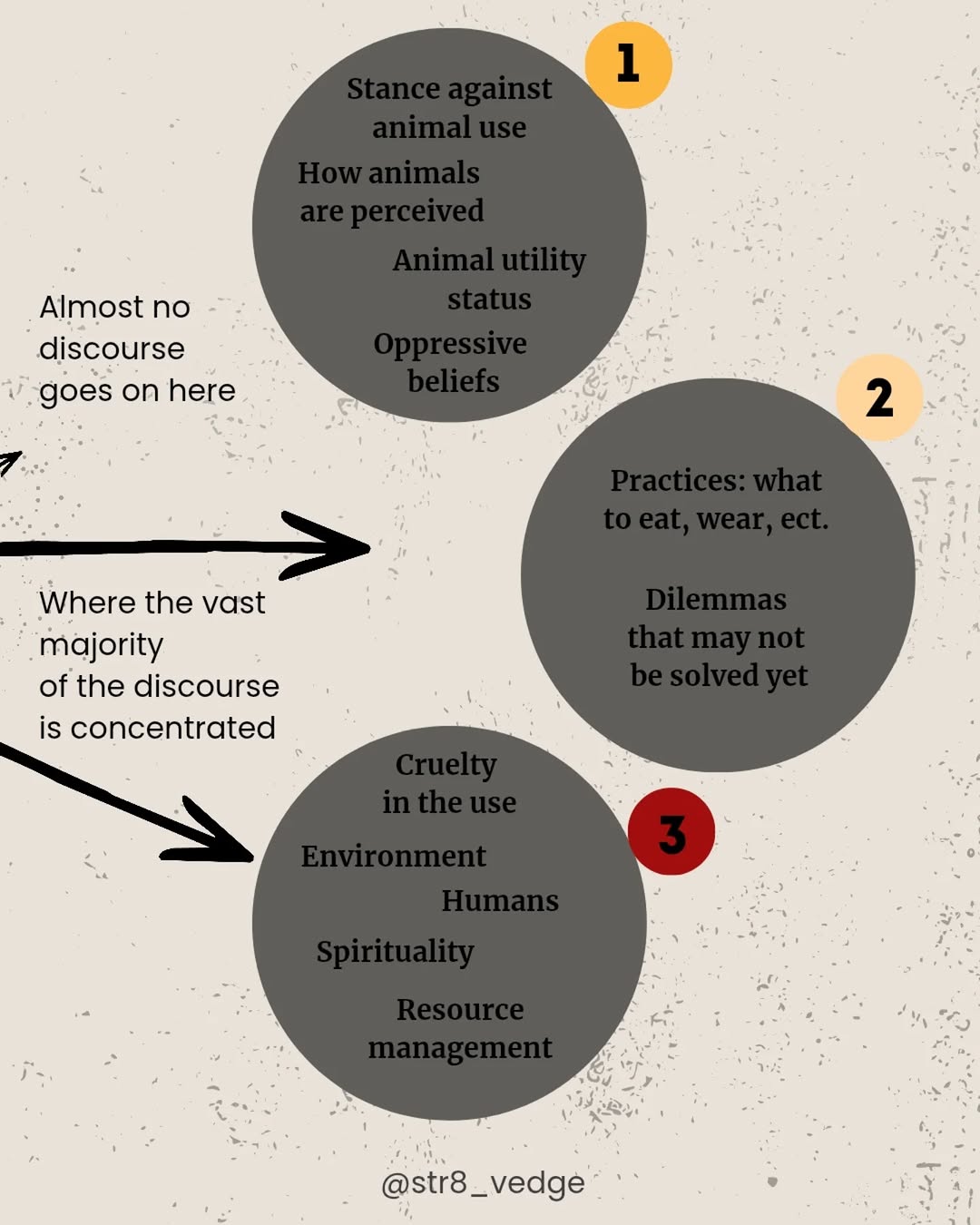
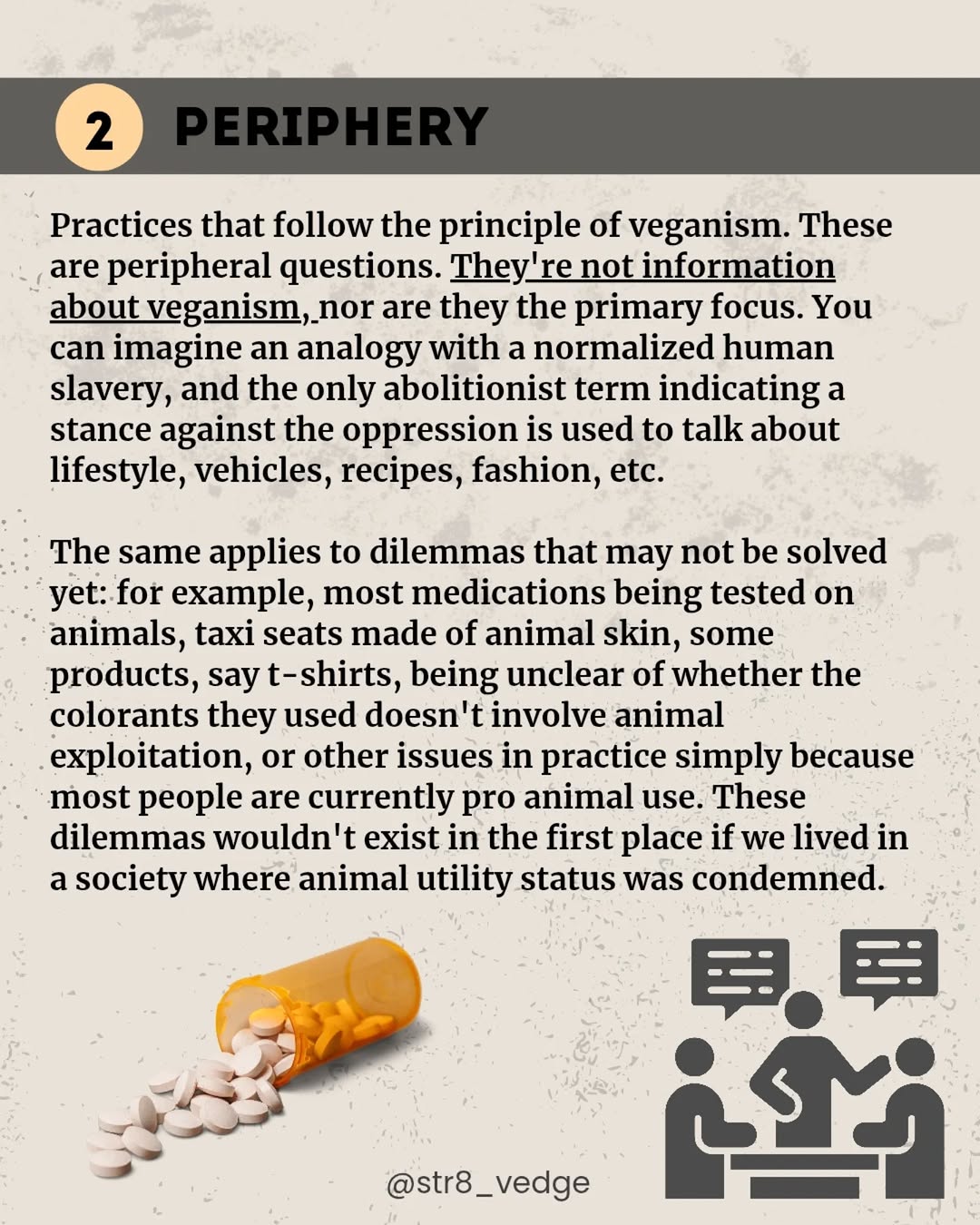
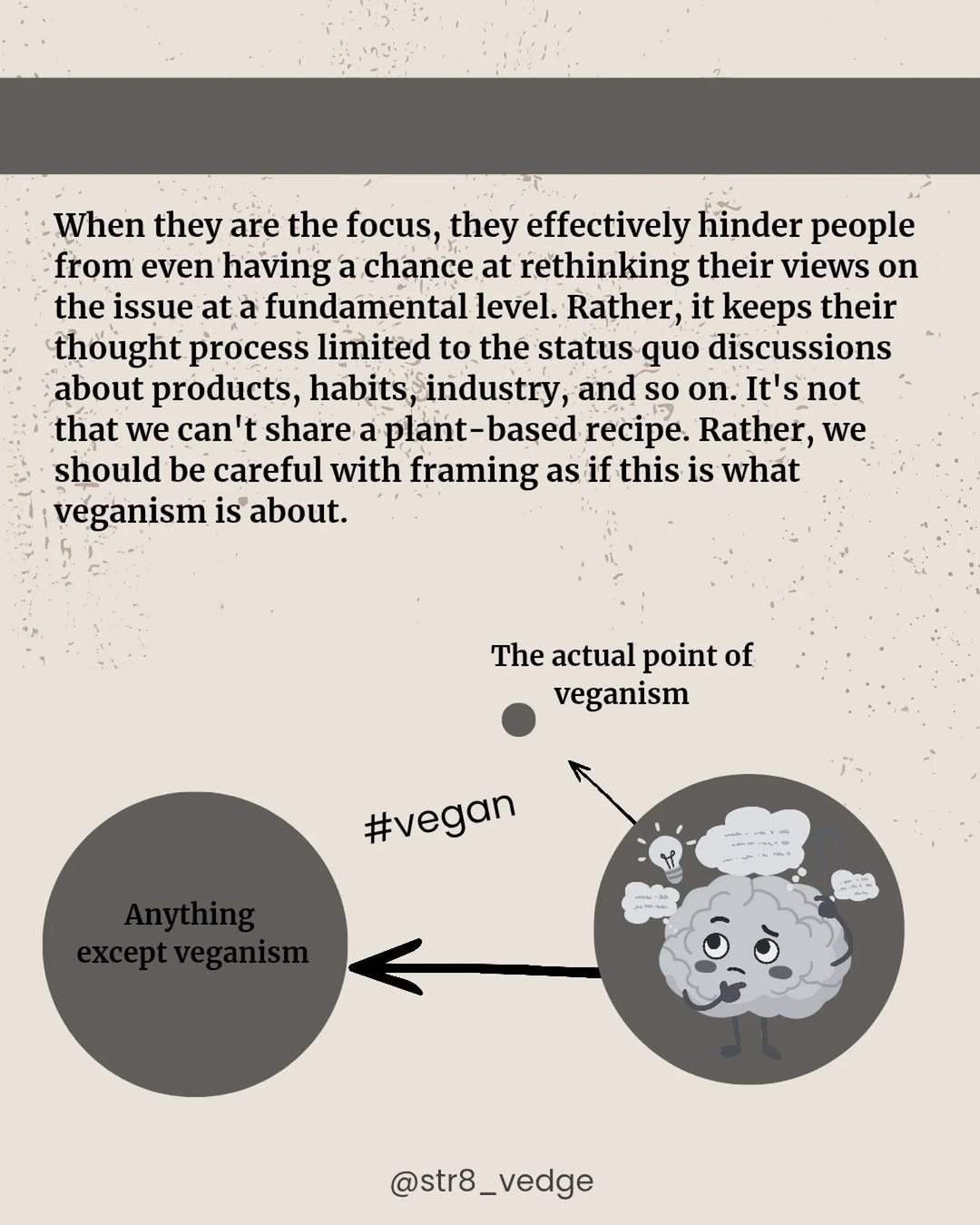
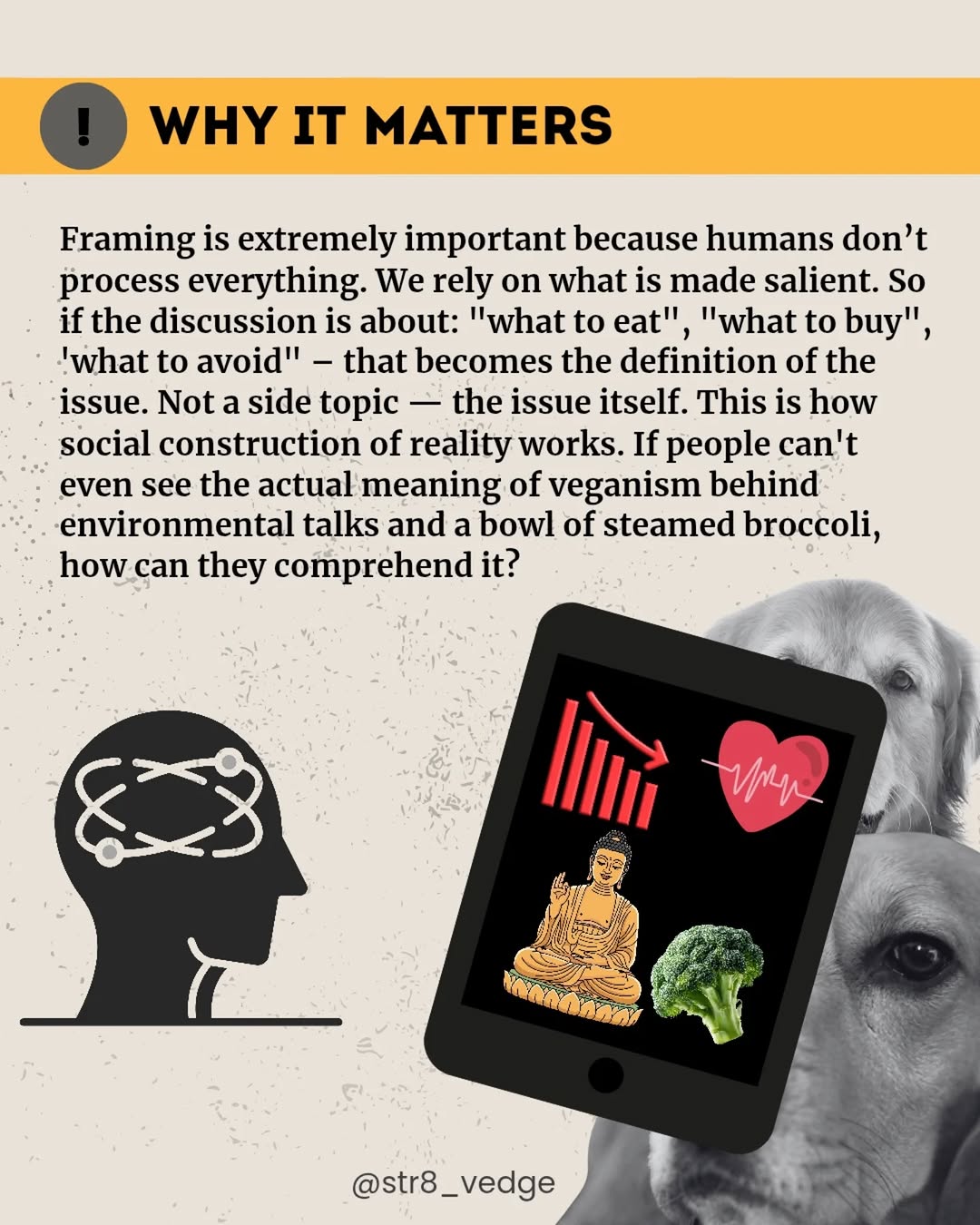
☝️ If veganism is framed as consumption—a lifestyle or a set of practices—it will never be seen as a rejection of exploitation. It doesn't have to be explicitly described as consumption to be understood that way. The focus on practices, diets, recipes, lifestyles, and products under the term “vegan” does this on its own. Research in framing theory, moral framing, and moral disengagement shows that how an issue is presented determines how it's understood. Over time, this becomes a socially constructed reality. This is exactly how veganism has turned into a "diet", "a diet against cruelty", "a lifestyle to reduce harm" – and other detrimental distractions known as "veganism" in society.
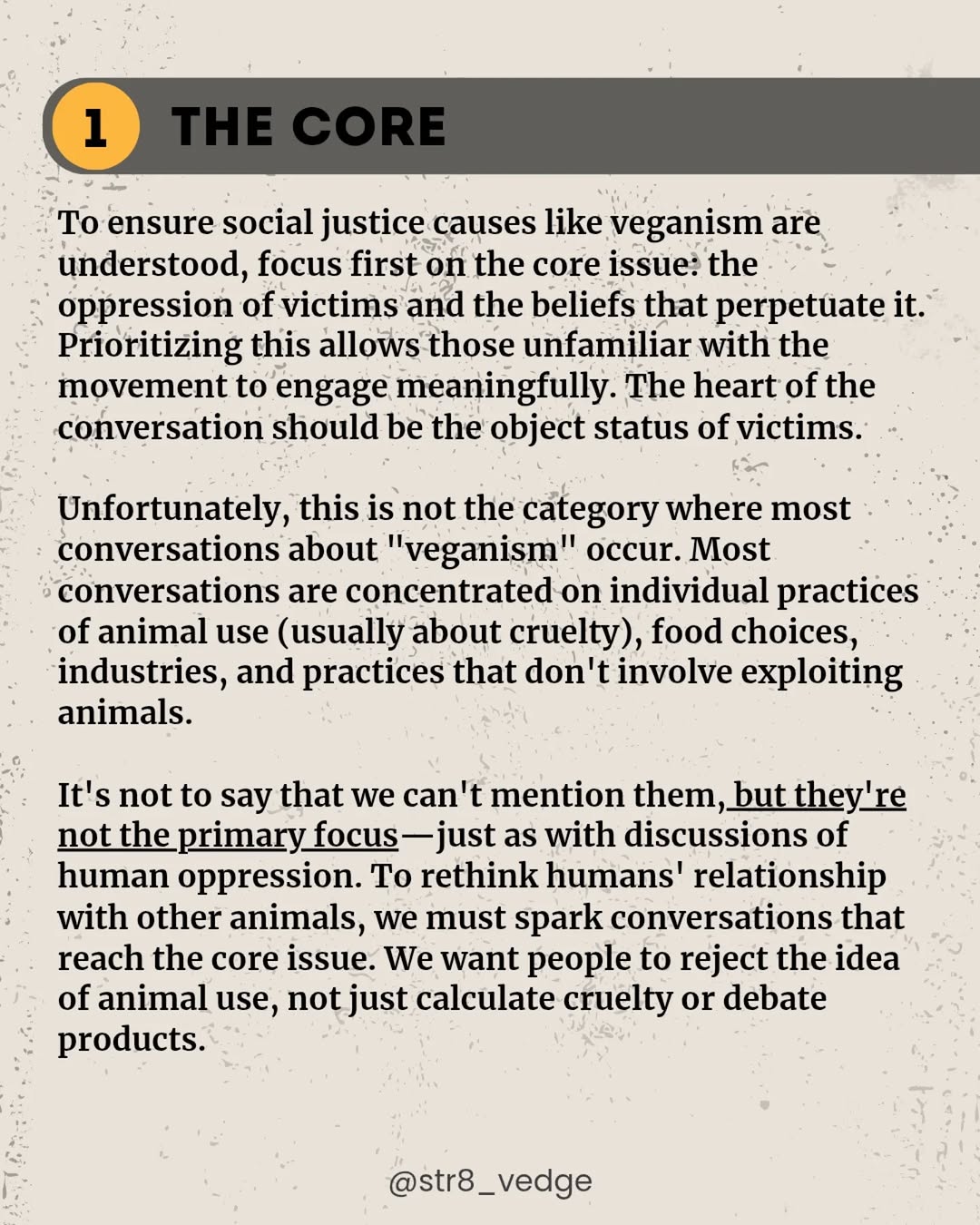
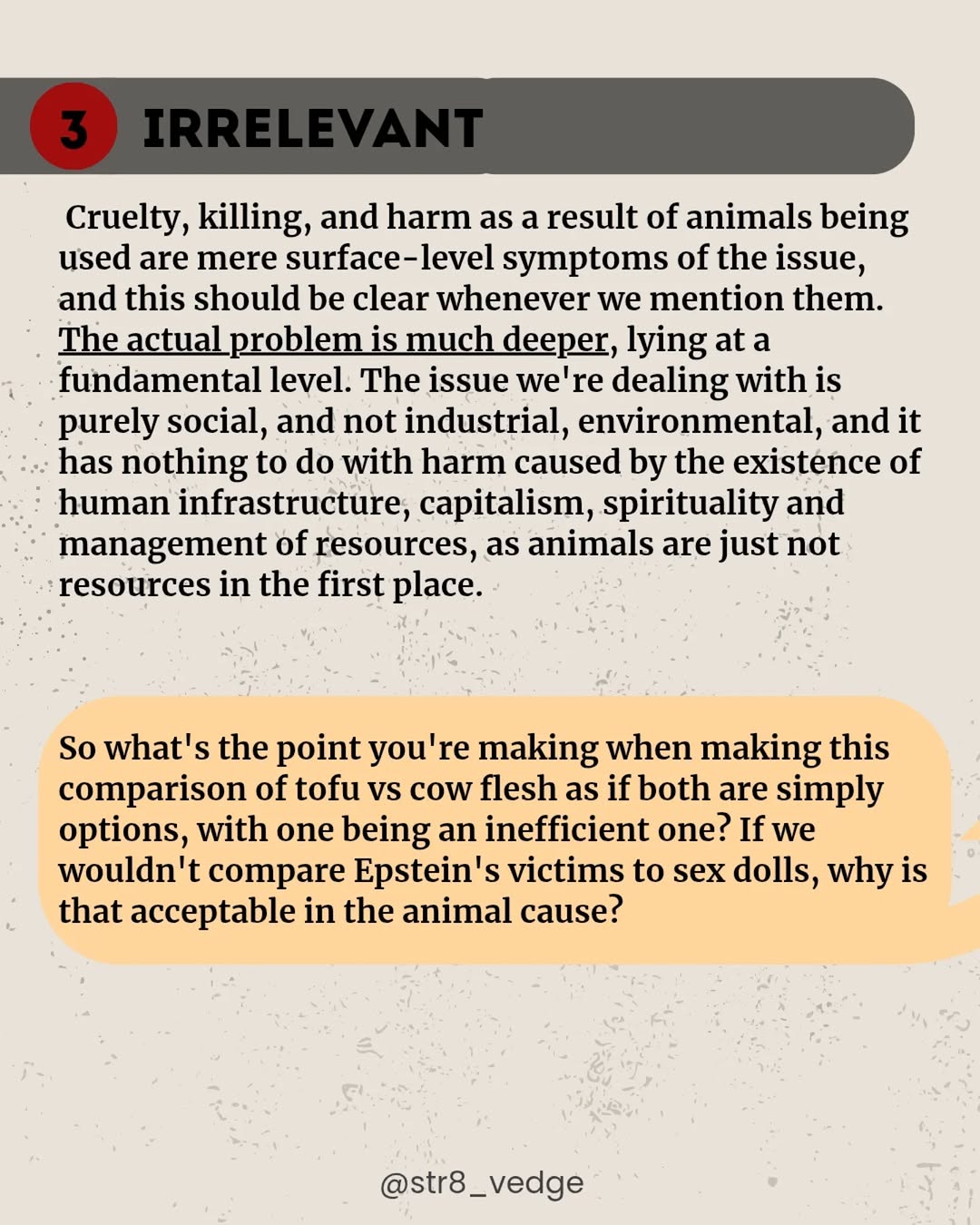
⚖️ The actual vegan stance, which is simply an ethical position against animal use, cannot be argued against with numbers, diets, harm calculations, or anything else. You either view animals as individuals or as resources to be used. Everything else, including practices (like a plant-based diet, which is a mere logical consequence of veganism), comes secondary or is completely irrelevant.
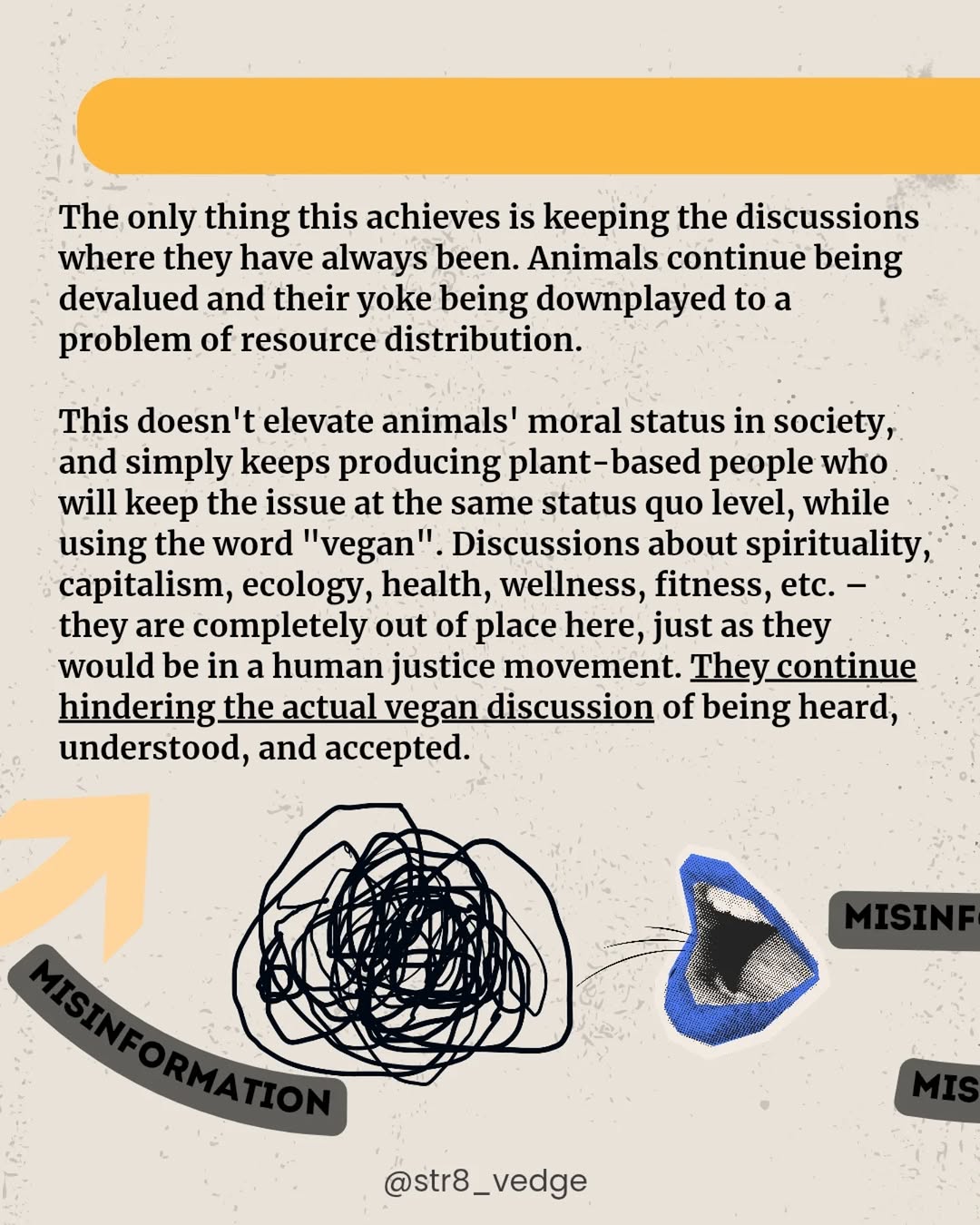
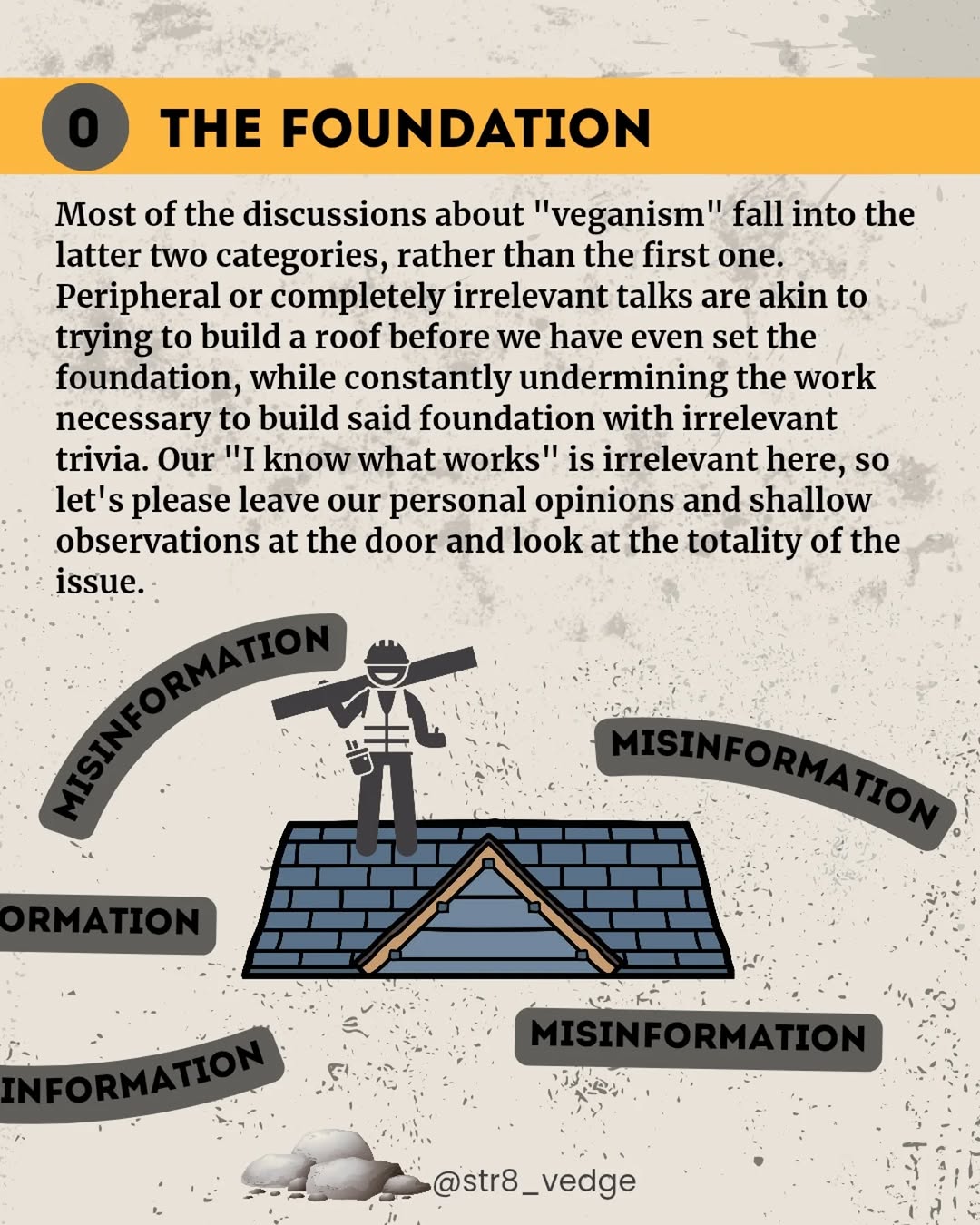
❗️ People understand issues based on what is made salient. These irrelevant discussions are a major barrier to learning, understanding, and accepting veganism.
📚 Research references:
Detecting misinformation through framing theory: the frame element-based model
Social Psychology Quarterly Article
NCBI PMC Article
Media Psychology Article
ResearchGate: Framing Theory
ResearchGate: Investigating the Framing Effect